
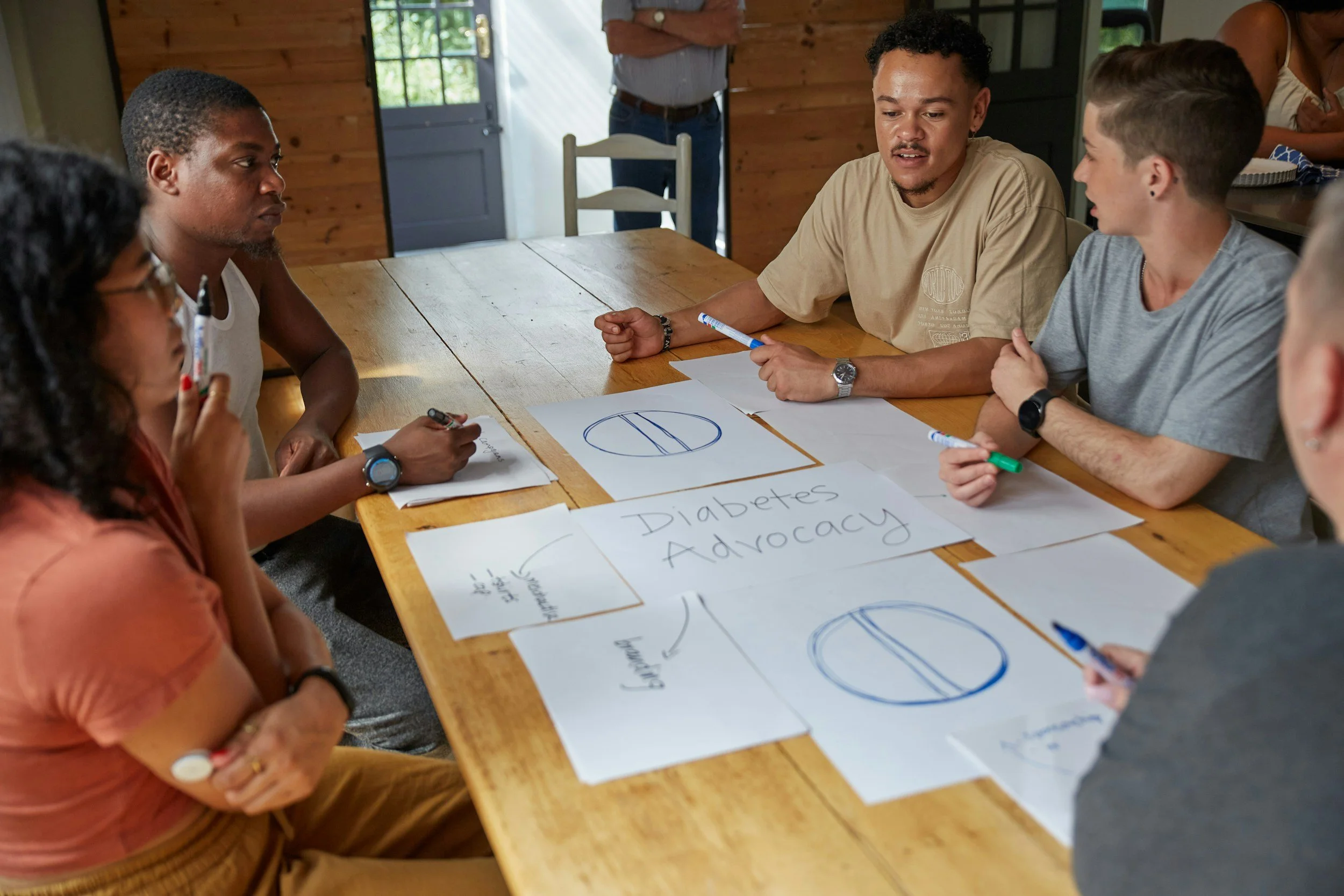
Your team is polite in meetings and stuck everywhere else. Everyone in the room knows what the problem is, and it has gone unnamed for so long that naming it now feels riskier than living with it. A restructure happened and nobody has talked about what it cost. New people were handed a login and left to work out the rest. The leadership group agreed on the values and then went back to the same Tuesday they had before. People are tired in a way that a holiday will not fix.
I work on the thing underneath all of that. I'm a Licensed Professional Counselor and group facilitator based in Colorado, and I build rooms where people can finally say the thing out loud and stay in relationship afterward.
My practice began with imposter syndrome, because it was the question people kept bringing to me. Twelve years of clinical work changed my read on it. What gets called imposter syndrome is often an accurate perception of a room that was never built with the person in it, and the person reading the room is not wrong. So my work moved from helping individuals manage a feeling toward helping leaders change what the room actually is.
What I want is a world where we can co-create with each other, in community, on a planet that gets to hold far more of our collective potential than it currently does. That starts small and in order: we tend the life we are, then we tend each other, then we tend the place we live. Every engagement is a place to practice that sequence with real stakes and real colleagues.
What Working Together Looks Like
You know your organization better than I ever will. I know how to build a container that can hold what your people have been carrying, and how to keep it holding when the conversation gets uncomfortable. The work is the two of those together, which means we design it together rather than me arriving with a finished product.
Before we meet, I spend time with you understanding the room: who is in it, what happened last year, who holds power, who has learned it is safer to stay quiet. From that we agree what the day is for, what the agreements will be, and what would count as this having been worth everyone's time.
In the room, the group does most of the talking. People build on what each other said, and I bridge, hold the container, and set the limits that make honesty possible. I also pay attention to who in the room holds less power to speak, because a conversation that only the loudest people get to have is not a conversation your team can build on.
Afterward you get a written summary, so the work keeps its shape once the day is over and the people who were not in the room can see what was agreed.
Facilitation
I facilitate leadership groups and intact teams through the conversations they have been working around. The format is interactive and co-creative, and the group does most of the talking, because the agreements that last are the ones a team wrote together.
Leadership Intensive
One or two days with a leadership group, with prework that gives people something real to arrive with. Participants reflect on their own reason for doing the work, map what a workplace they would actually want to be inside looks like, and name the behaviors that corrode it. They leave with working agreements the group wrote rather than a framework handed to them.
Team Reading and Half-Day
I hold short individual conversations with four to six people, then write an account of where the group loses each other and what it costs them, and we spend a half day on what the reading found. Built for a team going through a restructure, a merger, an influx of new people, or a slow collapse nobody has named out loud.
What Every Engagement Includes
Clear agreements at the start, attention to who in the room holds less power to speak, and a written summary afterward so the work keeps its shape once the day is over.
Speaking and Workshops
Moving Beyond Imposter Syndrome
Where the feeling comes from, what it may be accurately telling a person about their environment, and how leaders can tell the difference between a colleague who needs support and a room that needs changing. This session is the origin of my practice and remains the most requested. Participants learn to recognize how self-doubt operates at work, examine whose confidence the room rewards, and leave with language for naming the difference between a personal struggle and a structural one.
Building Workplaces People Are Glad to Be Inside
What actually makes a workplace good to be inside, and how a team co-creates that instead of waiting for a policy to deliver it. Participants examine the ingredients of workplace wellness, name the characteristics of a toxic environment and how to interrupt them, and work through experiential activities that build connection and alignment in the room. A keynote on this topic can inform a room. A workshop on it can change one.
Thriving Leadership Series, Parts One and Two
A two-part series for senior leaders. Part One works on leadership identity, with leaders reflecting on their personal reason for this work through experiential activities, self-reflection, and group discussion, supported by prework that deepens what the session can reach. Part Two moves into the ingredients of a culture people want to be part of, names the behaviors that erode it, and has the group build actionable next steps and shared working agreements together.
Participants leave able to:
- Name the workplace factors that support satisfaction and sustained performance
- Recognize the characteristics of a toxic workplace culture and address them directly
- Understand the role psychological safety plays in both wellbeing and output
- Align day-to-day behavior with the organization's stated mission and values
- Develop relational awareness as a practice rather than a personality trait
How Sessions Are Adapted
Every session is fitted to the room it is in. I have facilitated in settings where swearing would end the relationship and settings where formality would, and I work out which is which before I walk in. My job is to meet a group where they are and hold the container from there.
Organizational Development
I partner with organizations on the parts of culture a policy document cannot reach. That work includes:
Leadership training. Equipping managers to notice where confidence and credibility get distributed unevenly across their teams, and to build the conditions where more people can speak.
Workplace wellness programs. Building stress support, mentorship, and mental health resourcing into how an organization already operates, rather than bolting a benefit onto the side of it.
Cultural transformation initiatives. Identifying the practices that keep reproducing inequity, calling them by name, and designing the changes that actually interrupt them.
Relational awareness training. Helping teams develop real connection through structured exercises and communication practices that hold up under pressure.
Working with AI Without Outsourcing Your Judgment
AI is only as useful as the thinking a person brings to it. Used carelessly it agrees with you, fluently, and in doing so it trains the habit of mistaking fluency for being right. Used well, it argues back, surfaces the pattern you could not see, and hands your own thinking back to you sharper.
I work with clinicians and teams on the relational side of this. How to prompt so the tool disagrees with you. How to keep your own judgment in the loop. What to keep out of it entirely. Why the questions worth asking of a machine are the same questions that make a team function.
For clinicians, this includes a written protocol for keeping client material out of consumer tools and a consent practice for telling clients whether AI touches their material at all.
Selected Experience
Bonneville Power Administration, 2022 through 2024
My work with the Bonneville Power Administration began in 2022, when I was invited to speak for Women's Equality Day on imposter syndrome. That session was booked by a manager outside the agency's culture office, and the response to it led the culture office to begin bringing me back.
Through 2023 I delivered sessions on what makes a workplace one people are glad to be inside, focused on what actually sustains a team over time. In 2024 I facilitated the workshop sessions at the Contracts and Strategic Sourcing off-site at the Vancouver Water Resources Center, working with a group that included employees who had joined months earlier alongside colleagues with decades of tenure, all in the same exercises and the same conversation.
I also worked with a leadership team at the agency and facilitated their annual meeting, which was the room where a year of conversations about culture had to become something the group could actually hold.
Why Work With Me
I hold a master's degree and have spent twelve years in clinical practice as a Licensed Professional Counselor, including sustained work with grief, ancestral healing, and accountability. I'm a Certified Alignment Practitioner and I'm completing training in relational life therapy.
Twelve years in a therapy room changes what a person can sit with. A team bringing me a hard room, a stalled leadership group, or a conversation avoided for two years will not be the hardest thing I have held that week. My clinical training also means I notice who is quiet, who is performing, and what the room is doing with its power, in real time and without needing to make it the topic.
I work with organizations that already know relational skill matters and want help putting it into practice.
Let's Talk
If your team has a conversation it keeps postponing, that is the place to start. Tell me about the room and I'll tell you honestly whether I'm the right person for it.